Community Building on Social Media for Local Brands
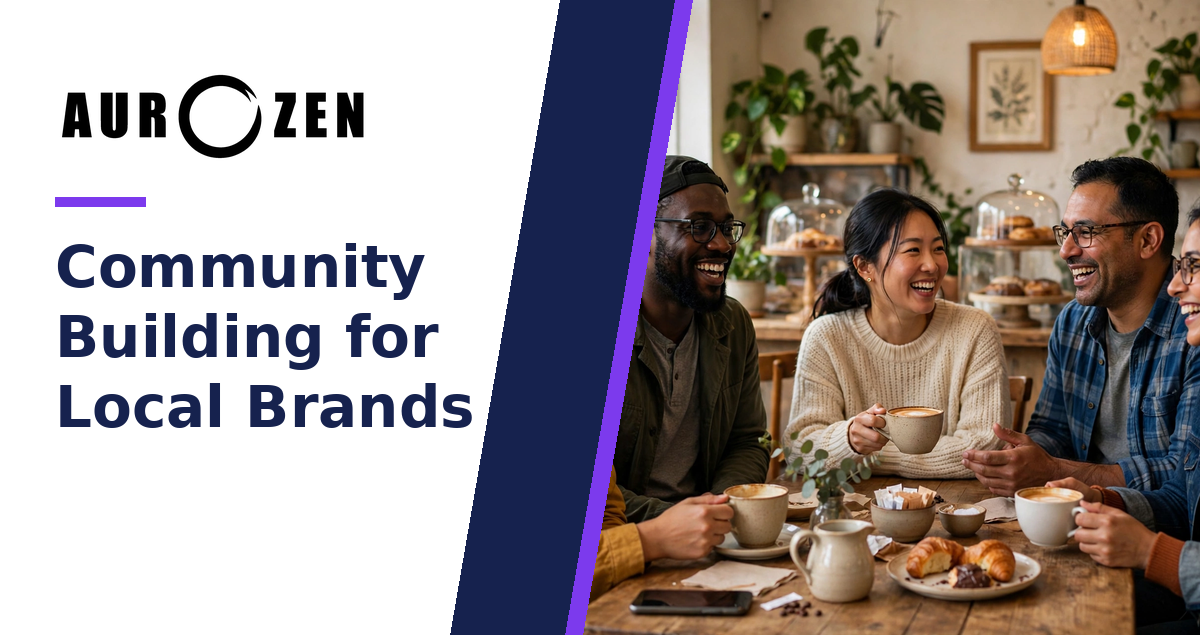
Community building on social media for local brands comes down to one shift: stop treating followers as an audience to broadcast to, and start treating them as neighbours to talk with. A local brand does not need a million followers. It needs a few hundred or a few thousand people nearby who recognise the business, trust it, recommend it, and come back. That kind of community is built with conversation, recognition, and consistency — not with viral posts or discount blasts.
Local brands have an advantage that national brands spend fortunes trying to fake: they are real places with real people, embedded in a real neighbourhood. Customers walk past the shop, know the staff, and care about the same local events, weather, and news. Social media works for local brands when it extends that real-world relationship online, not when it imitates a corporate advertising channel. The bakery that remembers a regular’s order, the gym that celebrates a member’s milestone, and the plumber who answers a question honestly all have community-building material already. The work is capturing it and sharing it consistently.
What a Local Social Community Actually Is
A community is not a follower count. It is a group of people who interact with each other as well as with the brand: customers who answer each other’s questions in comments, regulars who tag friends, locals who share your posts because they genuinely like them. That interaction is the asset. It creates social proof for newcomers, keeps the brand visible without paid promotion, and turns one-time buyers into repeat customers and referrers.
Measure community by engagement quality, not vanity numbers. How many people comment with more than an emoji? How many tag friends? How many customers mention your social presence when they visit? A page with 500 engaged locals will generate more business than a page with 10,000 silent followers bought or boosted from elsewhere. Algorithms agree: platforms show content that sparks conversation to more people, so genuine interaction compounds while broadcast posts fade.
Choose Depth Over Every Platform
Local brands often spread themselves across five platforms and do none of them well. Better to be excellent on one or two platforms where your customers actually spend time. For most local consumer businesses, that means Facebook and Instagram; for some trades and professional services, it may mean a local Facebook group or a strong Google Business Profile presence alongside Instagram. Ask your customers where they found you, check which platform drives enquiries, and concentrate there.
Each platform rewards different behaviour. Instagram rewards visual storytelling and short video; Facebook rewards local conversation, events, and groups; short-form video rewards personality and practical tips. Do not post identical content everywhere and call it a strategy. Adapt the same idea to each platform’s strengths, and let the platform where conversation flows best become your community home.
Consider a Group, Not Just a Page
For many local brands, a Facebook group outperforms a page for community building. Groups invite members to post, ask questions, and help each other, which is exactly the behaviour a community needs. A fitness studio’s members’ group, a restaurant’s regulars’ group, or a trades business’s local homeowners’ group all create a space where the brand is the host rather than the advertiser. Groups need moderation — set clear rules, welcome new members personally, and post prompts regularly — but the sense of belonging they create is hard to replicate on a public page.
Content That Builds Belonging
Community content answers a different question than advertising content. Advertising asks, “How do we sell today?” Community content asks, “What would our regulars enjoy, find useful, or want to talk about?” The mix that works for local brands usually includes several recurring types.
- People, not just products: introduce staff, celebrate customer milestones, share the story behind the business. People connect with people; product photos alone rarely start conversations.
- Local life: neighbourhood events, seasonal moments, local causes, and the everyday texture of the area. This content says “we are part of this place” and gives locals a reason to engage beyond transactions.
- Useful knowledge: short tips related to your trade or service, answered questions from customers, and honest advice that sometimes points away from buying. Generosity builds trust faster than any promotion.
- Participation prompts: questions, polls, “this or that” choices, and invitations to share photos or opinions. Participation content only works if you actually respond to the answers — a question you ignore teaches followers not to bother next time.
- Recognition: featuring customers, resharing their posts with permission, thanking reviewers by name. Being recognised is a powerful reason for people to stay in a community and invite others in.
Promotions still have a place, but they should be the minority of what you post — roughly one promotional post in five is a good ceiling. A feed that is all offers trains followers to wait for discounts and ignore everything else. A feed that is mostly interesting, useful, or enjoyable earns attention for the occasional offer.
The Conversation Habit
Community building is mostly a habit, not a campaign. Reply to every comment within a reasonable window, and reply like a human: answer the question, use the person’s name, add something beyond “thanks.” Ask follow-up questions. When a customer posts about you, acknowledge it. When someone criticises you publicly, respond calmly and take the resolution seriously; how a brand handles a complaint in public tells prospective customers more than any advertisement.
Go beyond your own page. Comment thoughtfully on local pages, partner businesses, and community discussions where your expertise is relevant — without hijacking the conversation to sell. Local visibility compounds: the more a brand shows up as a helpful neighbour across the local online ecosystem, the more familiar and trusted it becomes.
Set a realistic rhythm. One or two quality posts a week, plus daily attention to comments and messages, beats a burst of daily posting followed by a month of silence. Assign the job to a named person, not “whoever has time,” because community management that belongs to nobody gets done by nobody.
Turn Online Community Into Offline Business
A social community only pays off if it connects to real business. Bridge the gap deliberately. Invite online followers to in-person events, open days, workshops, or seasonal gatherings, and share the event afterwards so those who missed it feel part of it. Offer community members early access or a small genuine perk — not a constant discount spiral, but a recognition of loyalty. Use social posts to drive bookings, enquiries, and visits with clear, simple next steps: a booking link, a phone number, an invitation to message.
Track what matters. Follower growth is a secondary metric. Watch enquiries that mention social media, bookings from social links, event attendance driven by posts, and repeat visits from engaged followers. Ask new customers how they found you and record the answers; over a few months, a clear picture emerges of which community activity actually produces revenue, and that picture should shape where you invest effort.
Handling the Hard Parts Honestly
Community building has friction. Growth is slow at first, and the early months can feel like talking to an empty room. That is normal. Consistency through the quiet phase is what separates brands that build communities from brands that post for a month and quit. Negative comments will appear, and the correct response is almost always a prompt, polite, public acknowledgement followed by a genuine attempt to resolve the issue — not deletion, unless the comment is abusive or spam.
Resist the shortcuts. Buying followers, joining engagement pods, or running constant giveaways that attract prize-hunters rather than customers all inflate numbers while damaging the community’s quality and the account’s standing with platform algorithms. A smaller, real community in your town is worth infinitely more than a large, fake one scattered across the world.
A Simple 30-Day Plan to Start
If your local brand is starting from scratch, keep the first month deliberately small. In week one, choose your main platform, tidy up the profile with accurate hours, contact details, and a clear description, and post an introduction that tells the neighbourhood who you are and what you do. In week two, post two pieces of useful or local content and reply to every comment personally. In week three, ask your first participation question and feature a customer or a staff member. In week four, invite followers to something real — an event, an open day, or simply a visit — and thank everyone who engaged during the month by name where possible.
That modest plan achieves the real goal of month one: proving to yourself and to early followers that this brand shows up, listens, and belongs to the local conversation. Growth in month two builds on that proof. Brands that try to launch with a complex content calendar and daily posting usually burn out before the community has a chance to form; brands that start small and stay consistent give the community time to recognise them.
Frequently Asked Questions
How long does it take to build a local social media community?
Expect meaningful momentum after three to six months of consistent posting and genuine conversation, with compounding growth after that. Early growth is slow because trust is earned gradually. Brands that post reliably, reply promptly, and stay local in focus usually see engagement and enquiries climb steadily from the second quarter onward.
Which platform is best for a local brand?
It depends on your customers, but Facebook and Instagram cover most local consumer businesses, with a Facebook group often the strongest community tool. Trades and professional services may also benefit from a strong Google Business Profile. Choose one or two platforms where your customers already spend time rather than spreading thinly across all of them.
How often should a local brand post?
One to three quality posts per week is a sustainable rhythm for most local brands, combined with daily attention to comments and messages. Consistency matters more than volume: a reliable weekly presence beats bursts of daily posting followed by silence.
Should I run giveaways to grow my community?
Occasional giveaways tied to your actual offering can attract genuine locals, especially when entry involves visiting, tagging local friends, or sharing a real experience. Avoid generic high-value prizes that attract entrants with no interest in your business; they inflate numbers without building community.
What do I do about negative comments?
Respond promptly, politely, and publicly, acknowledge the concern, and offer a concrete resolution. Prospective customers judge you by how you handle complaints. Only delete comments that are abusive, spam, or clearly fake, and never delete legitimate criticism simply because it is uncomfortable.