
Why AI Agents Fail the 20% That Matter Most
Artificial Intelligence is changing the way companies work these days. Now it is very normal for Artificial Intelligence to take care of customer services, finding customers, making schedules, looking at data and automating work for companies in the United States.
These systems can assist any organization in saving time and operating costs while ensuring efficiency. Even with the swift growth of technology, many companies are coming to realize that there is a major issue. There are situations where an AI agent will fail, and that’s where it falls too short.
The truth is, AI is very good at performing predictable tasks. Can respond to repetitive questions, can organize data, can automate workflows and can process simple tasks at scale. The last 20% of interactions, however, are complex, emotionally intelligent, critical thinking, and judgment of people. The business value of these moments is the biggest as it can directly affect your customers’ trust, revenue and longer-term relationships. In such pivotal moments, when AI systems fall short, businesses face repercussions that extend beyond mere errors.
Understanding the “20% That Matter Most”
Many organisations think automation can replace much of the work. As a result, they put a lot of money into customer service platforms that use intelligence and automated decision-making tools. However, over time, they begin to get complaints, as customer satisfaction ratings drop and notice gaps in their operations.
This is because AI does not yet have the human understanding that is needed.
While machine learning models can take in huge amounts of information, they don’t actually understand the ’emotion’, ‘urgency’ or ‘context’ that people do. The other 20% typically involves scenarios that call for empathy, thinking outside the box, emotional intelligence and strategic reasoning. These interactions can be a smaller percentage of the total operations, but can make or break whether a customer will stay loyal to a brand or leave for good.
Why AI Agents Fail: Common AI Automation Challenges

AI Cannot Fully Understand Human Emotion
The need for emotional communication is one of the most significant challenges in AI automation. These are not always direct or formal ways of communication by customers. It can be diffused out of the way, be sarcastic or phrased emotionally. When humans converse with each other, they are able to pick up on tone, the urgency of the conversation, and emotions.
The downside to AI is that most of them are dependent on pattern recognition and predictive language models.
They are frequently misunderstood, and they react in a manner that doesn’t seem to care about their feelings. A customer might contact support after trying multiple times to solve the problem and being very upset. Support staff can see when someone is frustrated.
They respond with a caring tone. A computer support system, like a chatbot, solves the issue by going through the steps; it does not consider how the customer feels. The customer might become angrier and choose not to purchase anything from the company. Customer service from human support staff is different from that of a chatbot.
Customers like the interaction and are more likely to buy from the company. They appreciate the staff’s support.Customer service provided by human support staff shows they care. Companies that depend heavily on AI but do not put in place escalation processes may find they’re getting the wrong responses from customers. Businesses that become too dependent on AI without adequate escalation procedures then generate adverse reactions by doing so.
AI Struggles With Context and Conversation Flow
Many AI systems have difficulty maintaining context during longer conversations. In addition, automated tools often fail to understand subtle shifts in communication flow or customer intent. Unlike human representatives, these systems may repeat questions, miss important details, or provide inconsistent responses throughout an interaction.
Another factor contributing to AI agents’ failure in the 20% that matters is their limited contextual awareness. People know how to recognize and adjust to shifts and changes in situations. AI systems are not as flexible as human beings because they may not be able to see interactions in the context of a wider relationship.
As such, the customer often has to ask repeated questions, wait for responses that aren’t the same as the previous ones, or wait for responses that have forgotten information about the situation.In areas like manufacturing it is really important to get things right. This is also true for healthcare, finance, insurance and legal businesses. These companies cannot make mistakes. Not understanding what is going on.
A small mistake can cause problems with following the rules, legal trouble or a bad reputation. For example in these businesses one wrong move can lead to issues. This is why artificial intelligence can help with tasks but companies still need people to check things when they are dealing with complex or sensitive matters, like these artificial intelligence issues. Artificial intelligence can help with some things. Human oversight is still necessary when dealing with complex artificial intelligence issues.
Why AI Agents Fail: The Problem With AI Training Data

AI Depends Heavily on Past Information
Historical data is crucial for the development of AI systems. They do better when they have examples to refer to. Businesses, however, are in the midst of continuous evolution in real-world environments. Consumer behavior changes, industries change and unexpected situations occur frequently.
This means that AI agents can struggle to handle situations not part of their training data. For example, a customer may ask a specific question about a newly implemented company policy. When new data isn’t fed into the AI system, it can produce incorrect or misleading answers.
When AI is able to regurgitate misinformation, also referred to as “AI hallucination”, this is even more hazardous. Often, customers accept automated systems because they sound like experts. This can affect customer satisfaction and pose significant operational risks when inaccurate information is provided.
The Hidden Costs of AI Agent Failures

Businesses Often Focus Only on Cost Savings
Additionally, companies tend to be naive about the costs of AI failures. The main emphasis of most organizations is on the financial benefits they can achieve through automation.They can save money on staff, improve response times and increase scalability. They tend to ignore the long-term consequences of poor customer experiences.
Loss of trust, negative feedback, customer churn and damage to a brand’s reputation can cost companies far more than savings from automation. If an AI chatbot botches the transaction of a client who spends thousands per year, then this company may lose them.
Customers may also publicly share negative experiences when automated systems fail to deliver at crucial times. Online reputation is a key factor in today’s digital world. In order to achieve long-term success, companies must consider not only efficiency but also customer satisfaction and trust in AI.
The Automation Trap Many Companies Fall Into

Why Full Automation Creates Risk
One big problem is that many organizations fall into the automation trap. They think artificial intelligence can replace teams, and they start reducing the number of people overseeing things too quickly. Artificial intelligence still cannot make decisions, and it does not understand emotions or ethics.
Artificial intelligence can do things faster and more consistently. It does not have the same judgement as a human.Artificial intelligence is not meant to replace people; it is a helpful tool.
Instead of replacing employees, artificial intelligence helps large companies improve efficiency and streamline processes. It can even listen to customer conversations that contain important information and automatically create accurate transcripts. It can do office tasks, summarize things and write responses. Human staff can then focus on building relationships with customers, figuring out problems, understanding emotions and solving issues.
Why Human-in-the-Loop Artificial Intelligence is better
Combining Artificial Intelligence with judgement
This is also called “human-in-the-loop artificial intelligence”. Artificial intelligence makes things more efficient. Helps with work. Humans are still in charge. Make the final decisions. Businesses can save money. Still give customers a high level of service.
HITL systems also lower AI hallucinations – staff also look at sensitive interactions before final decisions are made. Customer expectations are constantly changing at a surprisingly high pace, which is part of why the 20% of customers who don’t like the AI agent will remain so.
These simple expectations have been met, fast service be damned, but modern consumers also demand personalization, empathy, and accuracy. Customers expect to be understood on their first call and for things to be handled easily for them. When AI systems create friction or get the situation wrong, users do not tolerate this for long and get impatient.
Some customers already have their frustration when they don’t get easy access to a human representative. These furrows are how much their frustration can climb high if AI simply bungles what they deem as their issues or keeps them stuck in automated, repetitive procedures. For this reason, firms that focus too much on the convenience of automation risk tarnishing their brand image as a result of the poor customer experience they provide.
The Importance of Strong Escalation Systems

AI Should Know When to Transfer Conversations
To minimize AI-related failures, robust escalation systems are crucial. AI tools will have to be created in a way that allows businesses to understand their own boundaries and quickly guide their complex situations to human representatives. The changeover needs to be seamless, with the customer not having to repeat the same things.
When escalation systems work well, customers feel supported rather than sifted through automated processes. It is important to continually evaluate and develop AI systems within organisations. Successful automation isn’t a one-dimensional matter of technology.
Organizations must have ongoing evaluation processes for reviewing failed transactions, grievances, and edge cases. In the long run, AI will develop into a super-efficient system that will keep updating and evolving.
Defining Clear Boundaries for AI

Not Every Task Should Be Automated
It is essential for organizations to set boundaries concerning how well the technology can serve them and which areas require the use of human skills. After all, there are always legal questions involving emotional involvement of customers, handling crises, and negotiation processes that should remain within human purview.
So organizations need to be very careful about which tasks they should automate and which they should leave to people. As we said before, machines are really good at working with numbers and doing things repeatedly. Machines are not good at dealing with things that are not certain, feelings or what is right and wrong. Organizations need to consider which tasks to automate and which to leave to people. Automation is good for some things. People are better at handling uncertainty, emotion and ethics.
Not having an understanding of these limitations can result in excessive organizational risk.
The Future of AI Agents in Business
AI Will Continue to Improve
The prospects for incorporating artificial intelligence into business are very promising. AI will keep getting smarter, smarter, and more context-aware. Complex conversations can be more efficiently managed by future AI agents than by today’s AI agents.
But even the most advanced AI will find aspects of human emotion and morality very difficult to master: empathy, moral reasoning, intuition and access to emotion. A successful business of the future will be using human beings not in their place, but in conjunction with a machine.
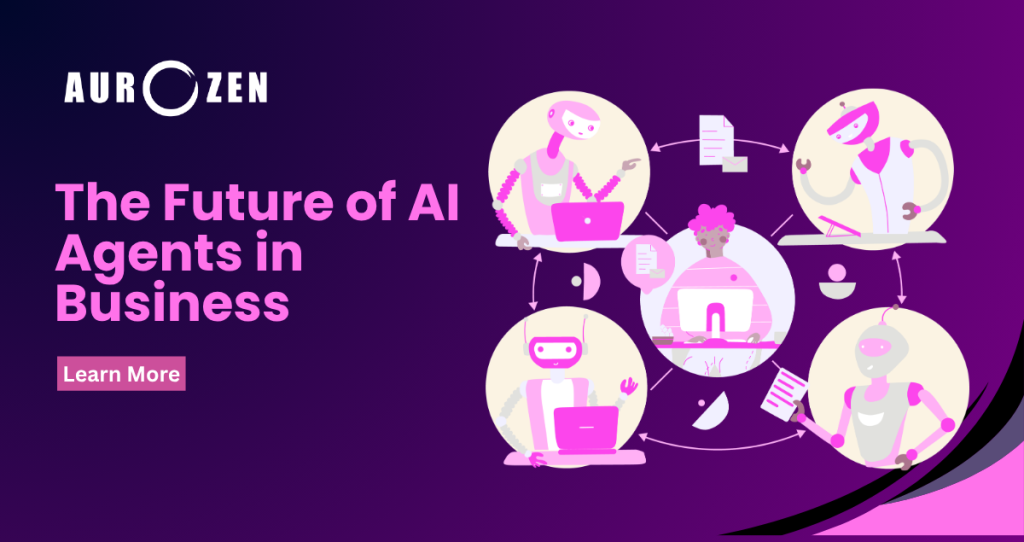
Rather, the most successful will be those who integrate intelligent automations and people with good skills. AI will perform repetitive work, repetitive speed, and scale, while humans will make judgments, be creative and build relationships. This mixed strategy generates better customer experiences, with the added benefit of an operationally efficient process.
Conclusion
For companies that are using automation it is really important to know that 20 percent of the time AI agents do not work like they should. We need to understand why AI agents fail. AI can really help companies be more productive and grow.. Companies also need to know what AI can and cannot do. If companies stop having people watch what AI is doing soon they might have problems that AI cannot solve.
If you are someone who works with companies, you might find this advice helpful: do not use much AI.Companies that integrate technology with human expertise gain deeper customer insight. This allows them to preempt issues and thrive in environments that benefit all stakeholders.
The companies that thrive as AI improves are those that recognize technology is meant to support, not replace, human expertise. Technology enables people to perform their jobs more efficiently.
Automation is not a substitute for human skills. Companies should keep this in mind when using automation. These companies will succeed because they understand that technology and human abilities are meant to work together
For companies to succeed and grow, they need both technology and human skills. The companies that combine technology and human skill will succeed.