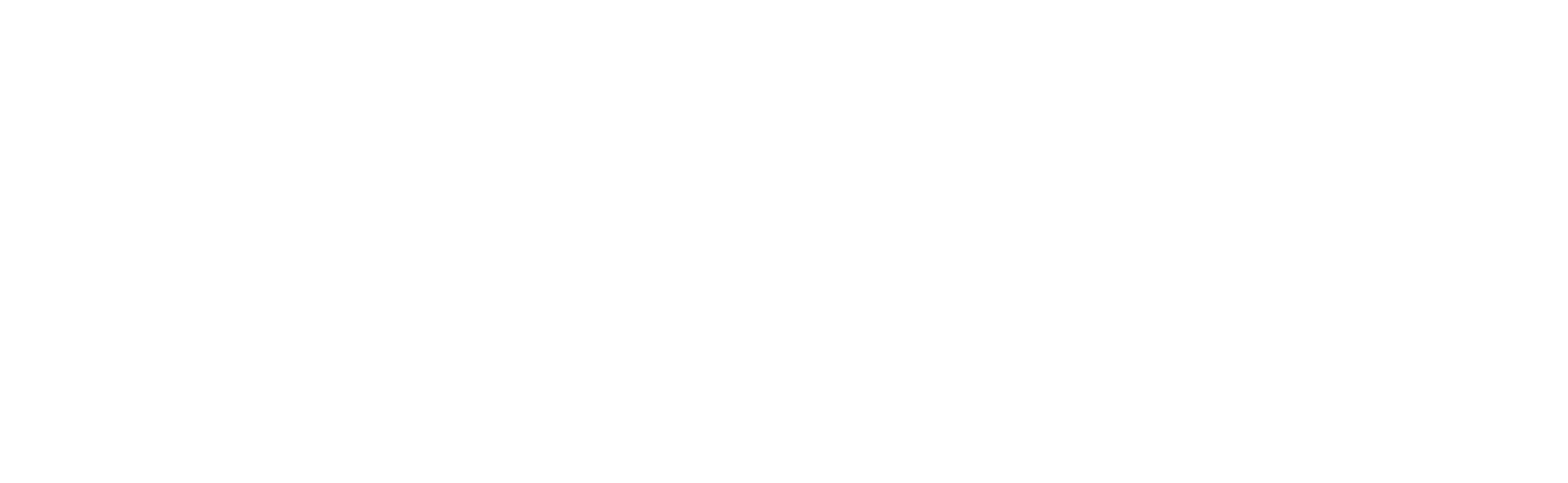

How To Use AI Agents To Optimize Websites And Boost SEO
Search is splitting into two audiences: humans typing into Google, and AI agents ChatGPT, Gemini, Claude, Perplexity reading, comparing, and sometimes acting on websites on a person’s behalf. If you want to use AI agents to optimize websites in 2026, the job is no longer “write better content and build more links.” It now includes making your site legible, structured, and actionable for software that reads pages the way a very fast, very literal assistant would.
AI-powered website optimization agents can help automate technical SEO analysis, content improvements, internal linking, structured data, and ongoing website monitoring.
This guide walks through what AI agents actually do to a website, the concrete steps to use them for optimization, and how to structure your site so both Google and AI answer engines can find, understand, and recommend it.
How AI Agents Optimize Websites for SEO
AI-powered website optimization agents automate specific, repeatable SEO tasks such as technical audits, keyword mapping, content analysis, internal linking, schema generation, and performance monitoring. These agents can gather data, identify optimization opportunities, recommend or implement changes, and monitor the results over time.
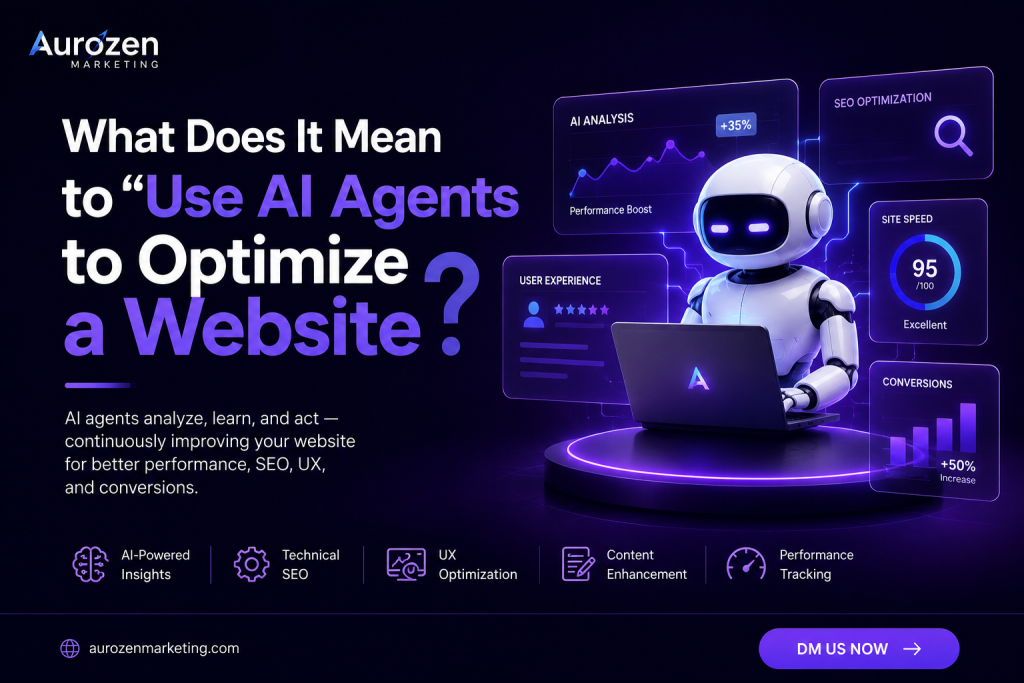
Unlike a simple AI writing assistant that only produces text when prompted, a true optimization agent typically works through a loop:
- Goal understanding: it’s given an objective, such as “improve rankings for a target keyword” or “fix crawl errors.”
- Data gathering: it pulls data from sources like Google Search Console, analytics, competitor pages, and live SERPs.
- Analysis — it looks for patterns: thin content, missing schema, slow pages, cannibalized keywords, broken internal links.
- Action — it drafts fixes: rewritten meta tags, new internal links, structured data, content briefs, or full articles.
- Iteration — it monitors what happened after the change and adjusts the next round of work.
That loop is what separates “AI-assisted SEO” from true agentic optimization.
Why This Matters More in 2026 Than It Did a Year Ago
Two things changed almost simultaneously this year, and together they explain why “use AI agents to optimize websites” has become a serious search topic rather than a buzzword.
First, AI referral traffic started converting better than traditional traffic.
Earlier, visitors arriving from AI tools tended to convert worse than typical search traffic they were browsing, not buying. That has reversed. Traffic referred by AI assistants is now converting meaningfully better than non-AI traffic, which means it’s no longer a side channel to ignore; it’s becoming a primary acquisition path for many businesses.
Second, agents stopped just reading and started acting.
Browsing-capable AI tools can now navigate a site, fill in forms, and attempt to complete a task booking a call, requesting a quote, adding something to a cart on a user’s behalf, not just summarizing what the page says. That’s given rise to a new discipline some in the industry are calling agentic engine optimization (AEO/AEO-adjacent frameworks): making sure a site isn’t just citable, but operable by an autonomous agent.
If your site is well-written but technically hostile to agents buttons that only work with mouse hover, forms with no labels, key content locked behind JavaScript a crawler can’t render you don’t just lose a ranking. You lose the completed action entirely.
A Step-by-Step Framework for Using AI Agents to Optimize Your Website
How to Find Clients for an AI Automation Agency
AI-powered website optimization agents can analyze technical SEO issues, content gaps, internal links, structured data, and performance signals at scale. By combining automated analysis with human review, businesses can identify optimization opportunities faster and make more consistent improvements across their websites.
Step 1: Run an AI-Powered Technical and Content Audit
Start by having an AI agent (or an AI-assisted audit tool) crawl your site and flag:
- Missing or duplicate title tags and meta descriptions
- Pages with thin or outdated content
- Broken internal links and orphaned pages
- Slow-loading pages and unoptimized images
- Missing or incomplete structured data (schema markup)
- Content cannibalization multiple pages competing for the same keyword
This is the fastest win available: an agent can process hundreds of URLs in the time it would take a person to review a handful manually.
Step 2: Let the Agent Map Keyword Intent, Not Just Keyword Volume
Traditional keyword research asks “how many people search this?” Agent-driven research goes a layer deeper, asking “what is the person (or the AI answering on their behalf) actually trying to accomplish?”
For a keyword like use AI agents to optimize websites, the intent is informational-to-commercial: someone wants to understand the concept and is evaluating whether to do it themselves or hire it out. A well-optimized article should answer the informational question directly and then offer a clear next step for the commercial-intent reader, without burying either audience.
Step 3: Use Agents to Draft Then Have a Human Edit for Accuracy and Voice
AI agents are strong at structure, coverage, and speed. They’re weaker at nuance, brand voice, and verifying claims. The most reliable workflow in 2026 is:
- Agent drafts the outline and first pass based on top-ranking competitors and search intent
- Human editor fact-checks, adds original insight or data, and adjusts tone
- Agent runs a final pass for readability, keyword coverage, and internal linking suggestions
This avoids two failure modes at once: fully manual content that’s too slow to scale, and fully automated content that reads generic and risks factual drift.
Step 4: Structure Content for Both Search Engines and Answer Engines
This is the part most guides skip. To rank with a search engine and get cited by an answer engine, structure content so the answer to each question is stated clearly in the first sentence or two after the heading not buried three paragraphs down. Answer engines extract concise, self-contained answers; if yours isn’t near the top of the section, a competitor’s will get quoted instead of you.
Practical formatting that supports this:
- One clear H1 with the primary keyword
- H2/H3 headings phrased as the actual questions people ask
- A direct 1–3 sentence answer immediately under each heading
- Supporting detail, examples, or nuance below that
- Bulleted lists and comparison tables wherever content is inherently list-like (agents and answer engines parse these far more reliably than long prose)
Step 5: Use Structured Data for AI Agents and SEO
Schema markup (FAQ schema, Article schema, Organization schema, Product schema) gives both traditional crawlers and AI agents an explicit, machine-readable description of what’s on the page. Think of it as translating your content into a format an agent can parse with certainty instead of inference. Sites that skip this are asking an agent to guess and guesses are where you lose to a better-marked-up competitor.
Step 6: Make Your Site Operable, Not Just Readable
If any part of your funnel depends on a user (or an agent acting for them) filling out a form, booking a call, or completing a purchase, test that flow the way an agent would encounter it:
- Are form fields properly labeled (not just visually implied by placement)?
- Does the page work with JavaScript partially blocked or slow to load?
- Are your
robots.txtand anyllms.txtfile set up to allow known, legitimate AI crawlers (like major model providers’ bots) while still blocking abusive scrapers? - Can key actions — book, buy, request a quote — be completed without a multi-step visual puzzle (like a drag-based CAPTCHA an agent can’t solve)?
Step 7: Monitor, Report, and Let the Agent Iterate
Set up recurring, agent-driven monitoring of rankings, crawl errors, Core Web Vitals, and AI-referral traffic (increasingly visible as its own segment in analytics tools). The value of an agent isn’t a one-time audit it’s the continuous loop of check, flag, fix, recheck that a human team can’t sustain at the same frequency.
If you’re building an AI automation agency, learning how to get your first clients is just as important as building the automation itself.
AI Agents vs. Traditional SEO Tools: What’s Actually Different
| Traditional SEO Tools | AI Optimization Agents | |
|---|---|---|
| Data gathering | Manual pulls, human-run reports | Automatic, continuous pulls from GSC, analytics, SERPs |
| Analysis | Human interprets dashboards | Agent surfaces prioritized issues automatically |
| Content | Human drafts from a keyword list | Agent drafts from intent + competitor gap analysis |
| Technical fixes | Flagged for a developer to fix | Agent can draft the fix (schema, meta tags, alt text) for review |
| Cadence | Weekly or monthly review cycles | Continuous, near real-time monitoring |
| Best for | Strategic decisions, brand judgment | Repetitive, data-heavy, high-volume tasks |
AI agents for SEO go beyond traditional tools by continuously analyzing data, identifying optimization opportunities, and helping execute repetitive SEO tasks.
The realistic conclusion isn’t “replace your SEO team with an agent.” It’s that agents absorb the repetitive, data-intensive layer of the work, freeing strategic time for the judgment calls messaging, positioning, and creative differentiation that AI still can’t reliably own.

No and any agency or tool claiming a guaranteed ranking should be treated with caution. Google’s algorithm weighs hundreds of signals, including competitor behavior that no one controls. AI agents can substantially improve your technical health, content depth, and structure all factors that influence ranking but no one can promise a specific position.
SEO optimizes for search engine rankings and clicks. AEO (answer engine optimization) optimizes for being directly quoted or summarized by AI answer engines like ChatGPT or Google’s AI features. Agentic engine optimization goes a step further, optimizing for AI agents that don’t just cite your content but attempt to complete an action on your site, like booking or purchasing.
Not usually. Well-structured content clear headings, direct answers, proper schema, fast pages tends to serve humans, search engines, and AI agents at the same time. The exception is technical/operational elements (forms, checkout flows, robots.txt rules) which need a distinct, deliberate review specifically for agent compatibility.
The category is moving quickly, with new autonomous SEO platforms and AI-agent-compatibility tools launching through 2025 and 2026. Rather than betting on one brand-name tool, focus on the underlying capability: continuous audits, intent-based content planning, structured data automation, and agent-accessible technical setup. Tools will change; that framework won’t.
It depends on internal capacity. Agents remove a lot of manual grind, but someone still needs to review output, prioritize what to fix first, and keep brand voice consistent. Teams without spare bandwidth for that oversight often get more consistent results from a managed team that already runs this workflow daily.
The Bottom Line
Using AI agents to optimize a website in 2026 means combining three things: agent-driven technical audits, content structured to be directly answerable (not just readable), and a site that’s genuinely operable by both humans and autonomous tools. Done well, it compounds every audit cycle makes the next one faster, and every piece of structured content makes your site easier for both Google and AI answer engines to trust.
If you’d rather have a team run this loop for you than build it in-house, Aurozen Marketing manages SEO, AI-driven automation, and full-funnel content as part of its done-for-you marketing services with a free trial task before any commitment, so you can see the quality of the work before deciding anything.